They got there by deciding, over and over again across years, what they were and what they weren’t. Licensing is downstream of that. You can’t build a collaboration business on an IP that doesn’t know what it stands for. There’s nothing for a partner to attach to, nothing to protect, nothing to extend. The deal structure comes later. Brand clarity comes first.
I understood this faster than I expected at the expo, partly because I’d spent years on the consumer end of these deals. Every collaboration I’d followed as a fan was actually a signal about how clearly a brand understood itself. The ones that felt right were the ones where both sides knew exactly what they were bringing. The ones that felt off were the ones where the IP was being stretched into territory it had no business being in, where the collaboration existed because someone said yes, not because it made sense.
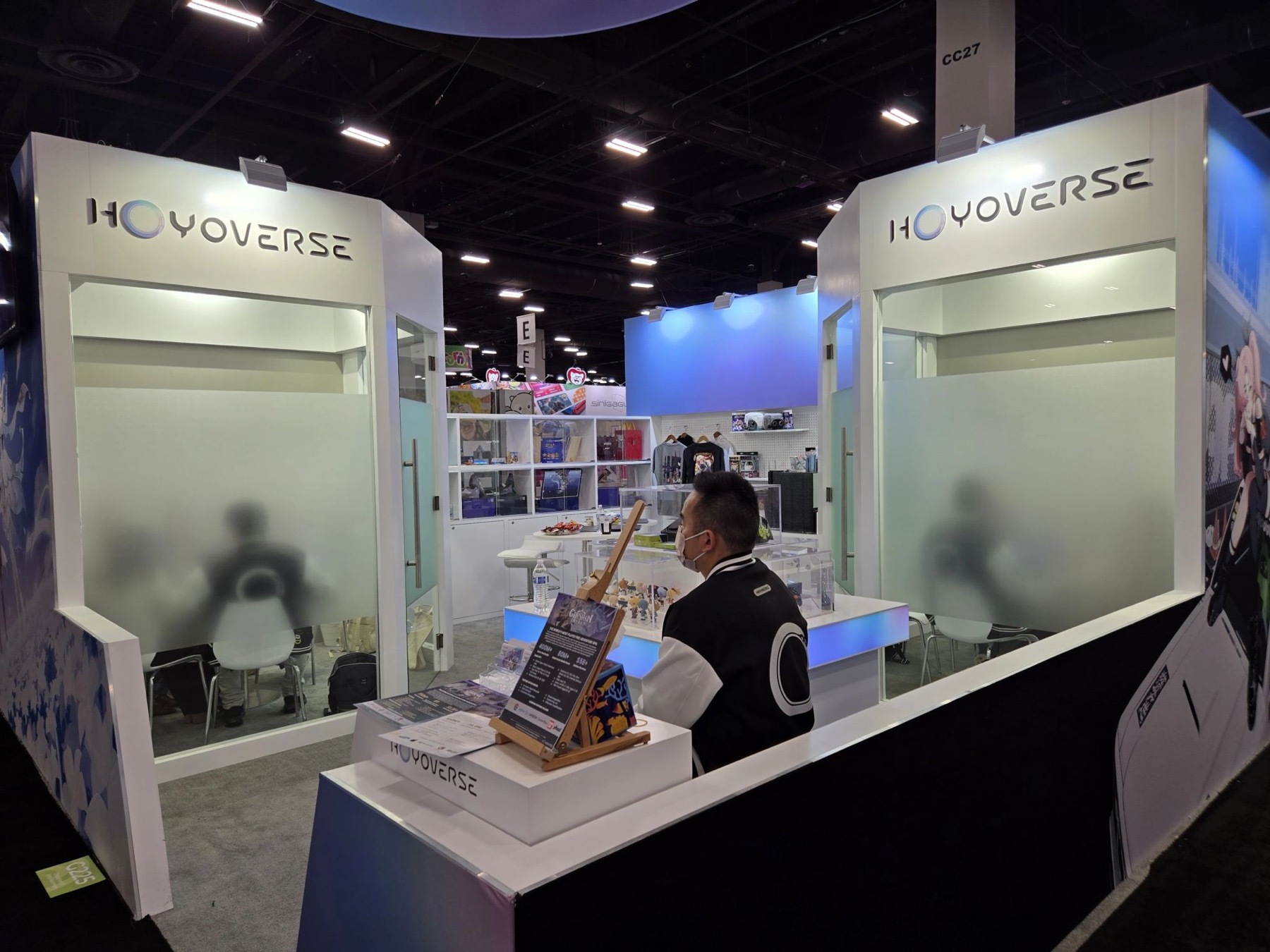
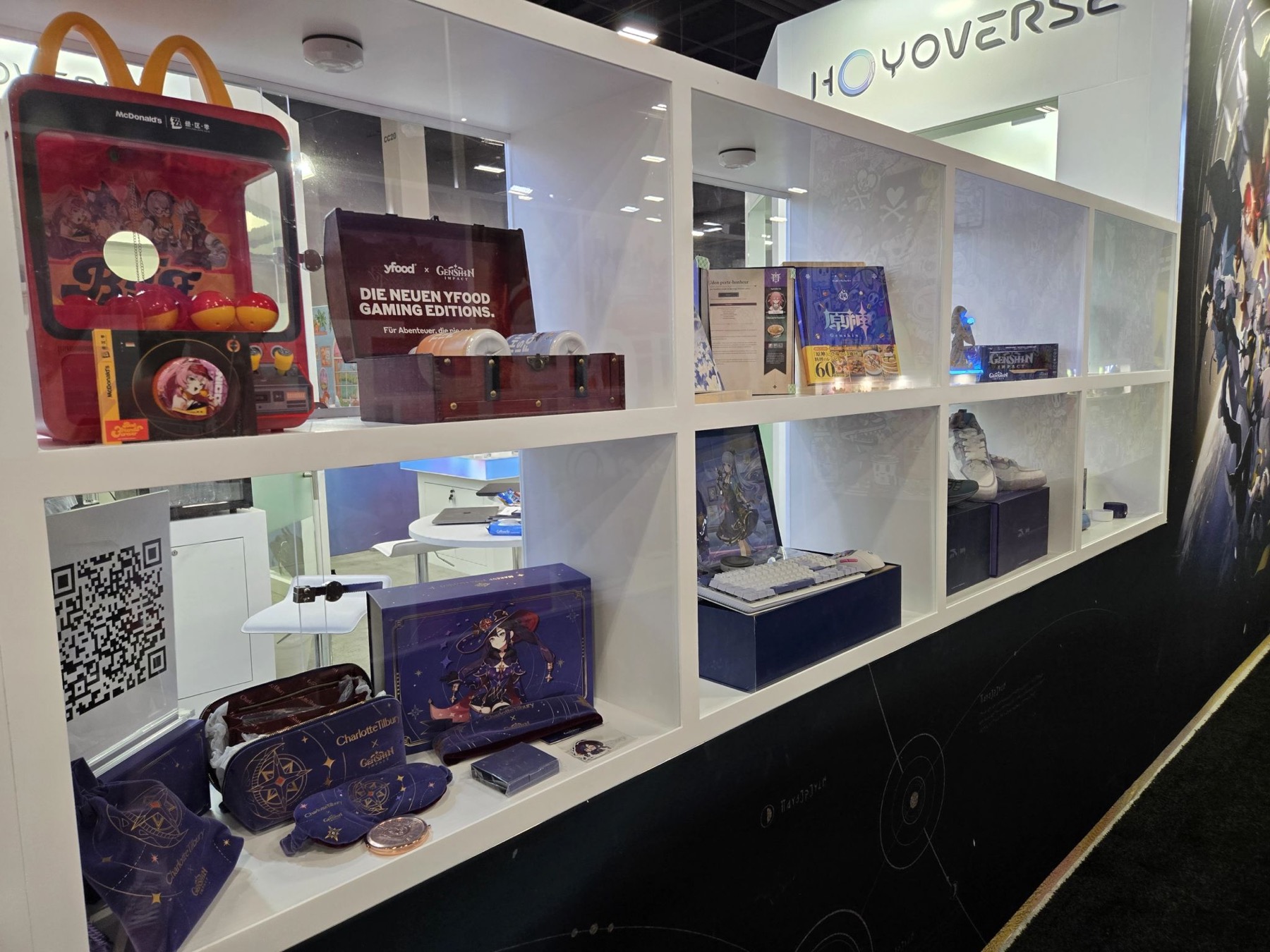
A conversation with Tzu-Ping (Michael) Lin from HoYoverse’s licensing department made this concrete. He walked me through how collaborations get planned at a studio like HoYoverse, what both sides are actually optimizing for, where the licensing team sits in that process, and what makes a partnership work versus what makes it fall apart. What struck me wasn’t any single tactic. It was how much of the decision-making traced back to a prior question: does this fit who we are? HoYoverse has spent years building IPs with enough internal coherence that the answer to that question is actually answerable. That’s not a given. A lot of studios can’t answer it cleanly.
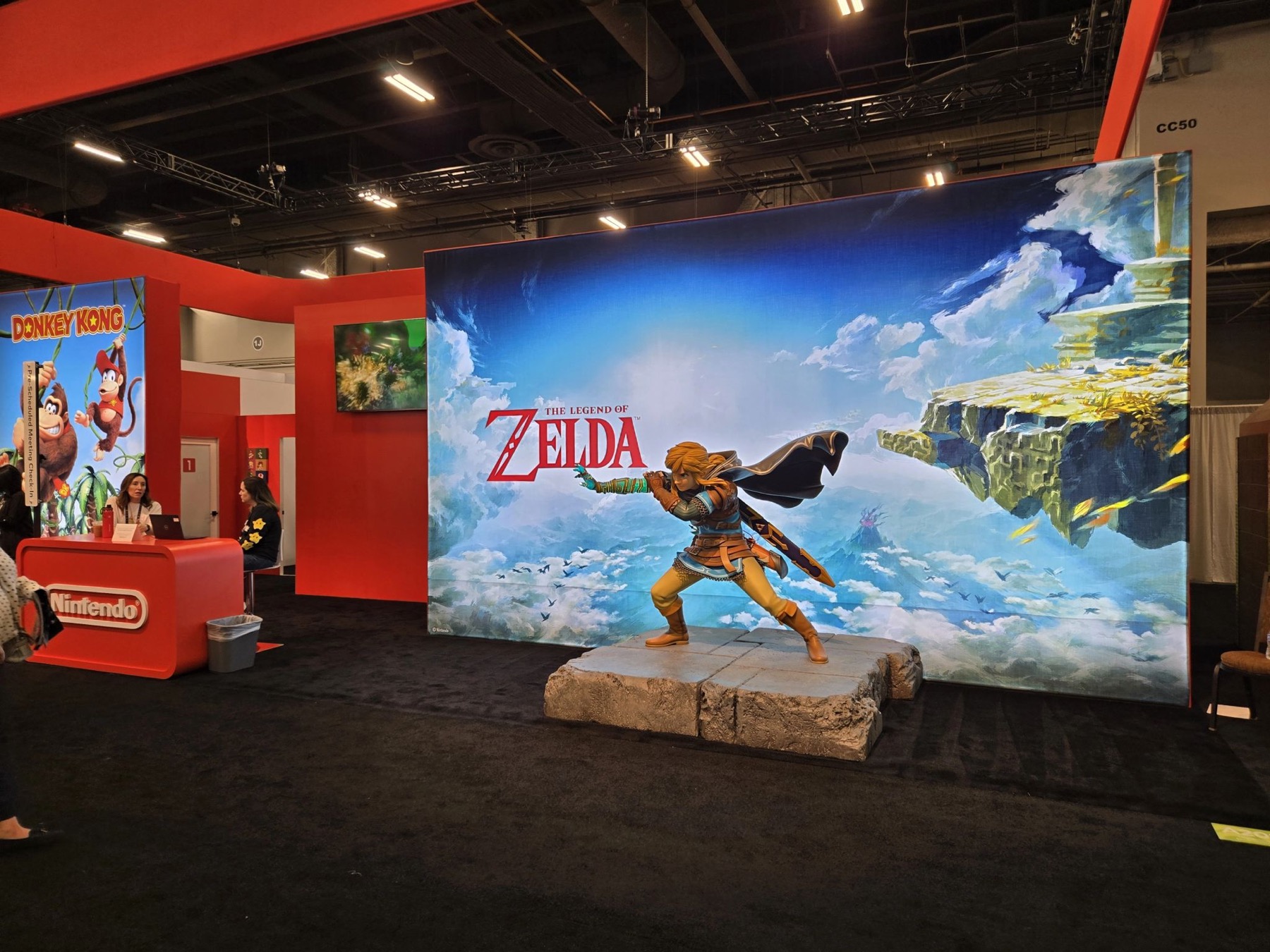
Which is what made one detail on the expo floor so interesting by contrast. Palworld, currently in the middle of a patent infringement lawsuit with Nintendo and The Pokemon Company, had positioned its booth directly next to Nintendo’s. Whatever the intent, the move read as a deliberate use of proximity as leverage. The lawsuit, the controversy, the “Pokemon with guns” discourse, all of it converted into foot traffic and attention on the expo floor.
It worked, in the narrow sense. I noticed. Everyone noticed.
But there’s a difference between being talked about and being trusted. Palworld was mobilizing every available resource to build visibility, which is a rational thing to do when you’re a new IP trying to establish yourself. I don’t think it’s a wrong move, exactly. I just don’t find it particularly admirable, because visibility borrowed from someone else’s brand clarity isn’t the same as having your own.
The IPs that fill a trade floor like that year after year aren’t there because they were strategic about exposure. They’re there because they spent a long time being consistent about what they were. That consistency is what makes a licensing business possible. It’s also what makes it defensible.
Brand discipline isn't a licensing strategy. It's what makes a licensing strategy worth having.
它们走到这儿,是靠在很多年里一次又一次地决定自己是什么、不是什么。授权业务是这件事的下游。你没法在一个说不清自己代表什么的 IP 上搭起一门合作生意——没有东西给合作伙伴抓住,没有东西要保护,没有东西能延展。合同结构是后面的事,品牌的清晰度要先立住。
在展馆里我比预期更快就理解了这件事,部分是因为我这些年一直站在这些合作的消费者这一头。每一次我作为粉丝追过的联名,其实都是这家 IP 对自己理解有多清楚的一种信号。那些感觉「对」的,是双方都清楚自己带来的是什么的联名。那些感觉「不对」的,是 IP 被拉到它本来就不该去的地方——联名之所以存在,只是因为有人说了 yes,不是因为它成立。
我在展位上和米哈游授权部门的 Tzu-Ping (Michael) Lin 聊了一次,让这件事变得具体起来。他给我讲了像米哈游这样的工作室内部一场联名是怎么被规划出来的,双方各自在为什么买单,授权团队在这条链路里坐在哪个位置,以及一次成立的合作和一次散架的合作之间差在哪里。让我印象深的不是任何一个具体的战术,而是他们的决策有多大比例其实是回到一个更前置的问题上的——这件事配不配得上我们是谁。米哈游花了很多年把自己的 IP 做出了足够的内部一致性,所以这个问题是能被回答的。这并不是理所当然的事。很多工作室其实没法把这个问题干净利落地答出来。
所以展馆里的一个细节反而显得格外有意思。Palworld——正和任天堂与宝可梦公司打专利侵权官司的那款——把展位直接摆在了任天堂边上。不管意图是什么,这个动作读起来就像刻意在用「离得近」作为杠杆。官司、争议、「拿枪的宝可梦」那一整套讨论,全被转化成了展馆里的人流和注意力。
在最窄的那层意义上,它确实奏效了。我注意到了,所有人都注意到了。
但「被谈论」和「被信任」是两回事。Palworld 在调动一切可以调动的资源来堆起曝光度,作为一个想要立住脚的新 IP,这是一件合理的事。我也不觉得这就是错的。我只是不特别欣赏它,因为借别人品牌清晰度拿到的曝光度,不等于你自己有。
那些年年撑起这种展馆的 IP,不是因为它们在曝光这件事上很有策略。它们在那儿,是因为它们花了很长时间在「自己是什么」这件事上保持一致。这种一致性才是授权业务成立的前提,也是它能防守得住的原因。
品牌自律不是一种授权策略。它是让一套授权策略值得存在的那个前提。